

.jpg)
When we think of a pilgrimage, we often imagine silence: time alone, space for reflection or a journey inward.
“Walking the Talk for Dementia,” a 40 kilometer sojourn along the Spanish Camino de Santiago, is nothing like that. There is very little silence here. Over ninety people from across the world, endless conversations, laughter, spontaneous moments, new friendships forming with every step. At times, I find myself longing for a little more quiet, a chance to simply walk with my own thoughts. But then I realize that this journey was never meant to be a solitary one. Its true purpose is connection.
Too often, dementia is portrayed as a death sentence, a gradual disappearance. Here, I see people who continue to laugh, make plans, walk together, embrace one another, build friendships and believe that they can still make the world a better place to live for everybody despite their differences.
Every day we walk and we talk: about research, about families, about loss, about guilt, about hope, about what it truly means to live with or alongside dementia. It quickly becomes clear that although our stories are different, we have all been brought together by a similar purpose. Some have lost a parent. Others care for a spouse. Some live with dementia themselves. Others are clinicians, nurses, social workers, researchers or advocates. Yet as we walk together, our individual stories become larger, we become a community.

For me, this journey also reflects my own path. For more than a decade, I was the primary caregiver for my late mother, who lived with Parkinson’s disease and dementia. Today, my work focuses on improving dementia care through research, education and collaboration in primary care and community. I spend part of my time thinking about how health and social care systems can better support people living with dementia and those who care for them. Sometimes it feels as though my personal experience and my professional work belong to different worlds. Walking here, I realize how deeply they belong together.
No one on this journey needs an explanation for why dementia is far more than a medical diagnosis. We all understand that it transforms relationships, daily routines and future plans. It changes lives. And yet this journey is not defined by loss. It is about life.
Too often, dementia is portrayed as a death sentence, a gradual disappearance. Here, I see people who continue to laugh, make plans, walk together, embrace one another, build friendships and believe that they can still make the world a better place to live for everybody despite their differences.
And this is not a naïve optimism. It is a conscious decision to see a person before the diagnosis.
.jpg)
When I look back on this experience, I doubt that I will remember how far in terms of kilometers or miles we walked each day. I will remember the people and conversations with them. I will remember the feeling of belonging, the understanding that no matter where we come from or what role we play — someone living with dementia, family member, clinician, nurse, social worker, researcher or advocate — we all walk the same road.
Perhaps that is the greatest gift of this event.
It reminds me that meaningful change rarely begins with grand declarations. It begins when people meet. When they listen to one another's stories and truly hear each other. When they choose to walk together. Because sometimes, the most important part of the journey is not the distance we travel, it is the people with whom we share the road.
About the author
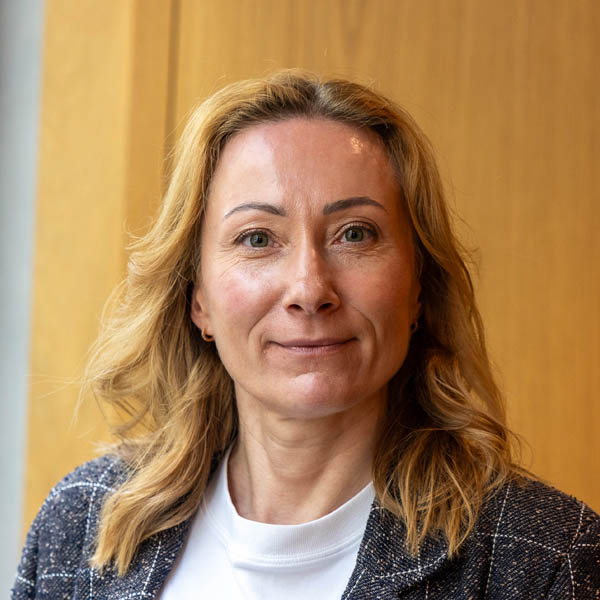
Sonata Maciulskyte is an Atlantic Fellow for Equity in Brain Health researching and teaching social policy and gerontology; developing national guidance, including postgraduate programs, for long-term care workforce; advising government on social policy and gerontology; working to improve dementia care policies.


.png)

