

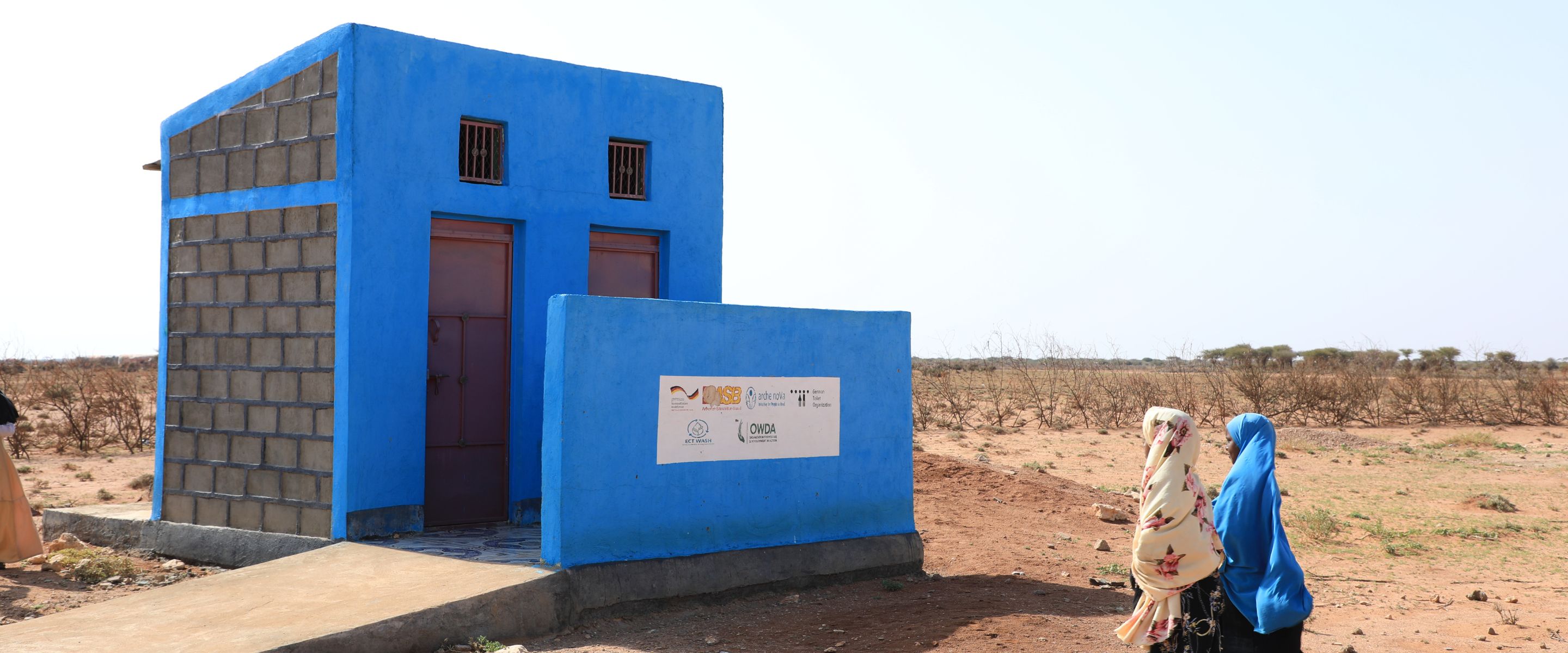
On paper, providing a water point is a success. A borehole is drilled. A handpump is installed. A toilet block is constructed. The numbers look good: households reached, liters provided, facilities built. But in the communities living in the 14 countries that my program is responsible for, I have learned that water is never just about infrastructure. It is about who holds the power to decide who benefits, who is safe and who is still left behind.
These realities have reshaped how I understand my work. As an Atlantic Fellow committed to advancing gender equity in Southeast Asia, I have come to see that justice begins with the details, such as the height of a tap, the presence of lighting, the composition of a water committee and the location of a latrine. When women, girls and persons with mobility challenges are involved in shaping water systems, the results are not only more inclusive, but also more sustainable and resilient.
WASH (Water, Sanitation, and Hygiene) facilities are critical infrastructures that must deliver gender-sensitive solutions that also consider the needs of people with disabilities.
For instance, in Indonesia, water facilities that once stood proudly at the edge of a hilly village remained unused. The designers had not considered those with limited mobility and with the path to them uneven and slippery during the rainy season, people were not keen to risk venturing along it for much of the year.
In a flood-prone community in Bangladesh, women avoided going near the communal toilets at night, because of a lack of lighting and no secure locks. During the monsoon season, the flood waters rose, which contaminated the latrines rendering them out of action for some of the year. In Ethiopia, Somalia and Somaliland, many girls stayed away from school when they were menstruating because the school’s sanitation facilities provided neither enough privacy nor appropriate washing amenities, and meant the girls were more at risk of being bullied.
My observations over time have shown me that access to water, sanitation and hygiene facilities is not a neutral issue. WASH (Water, Sanitation, and Hygiene) facilities are critical infrastructures that must deliver gender-sensitive solutions that also consider the needs of people with disabilities. The focus of our work is not just on delivery but on the design processes before the amenities are built. We start by setting up listening sessions: We ask women to map their daily routes for collecting water. Girls describe what makes a toilet feels “safe.” Women with disabilities describe small design changes, such as a handrail, a wider door, a non-slip surface, that can make a world of difference. Most effective water solutions are not about adopting advanced technology; rather, successful outcomes depend on an inclusive approach when engaging with the community about access to water.
Being part of the Atlantic Fellows community has strengthened this conviction. Through dialogues with Fellows across Southeast Asia working on gender justice, public health, disability rights and governance, I have come to better understand how structural inequality operates across sectors. The community has provided a space to reflect critically on power, privilege and participation. All these themes now inform how I engage communities in WASH programming. Being part of a network committed to equity has reaffirmed that technical expertise alone is not enough; courageous advocacy for inclusive systems is equally essential.
The changes that women make when genuinely included are visible in everyday life. In communities where women help determine the placement of water points, fetching clean water for families becomes safer and less time-consuming, reducing unpaid care burdens and freeing hours for rest or income generating work. In disaster-prone areas, elevated latrines designed with community input remain functional during monsoons, protecting health and dignity when flooding occurs. In several African countries, schools that adopted gender-sensitive designs for their latrines and wash areas have enabled girls, including those with disabilities, to manage menstruation in dignity and safety and attend classes more consistently. These are not symbolic adjustments as they are practical design decisions that determine whether infrastructure truly serves everyone.
Such outcomes do not happen automatically. They emerge when women and girls are intentionally included in planning, budgeting and monitoring process from the start. Too often labelled as “vulnerable,” women and girls are in fact central to solution. They are key in understanding the seasonal water patterns, calculate household needs with precision and anticipate safety risks long before planners do. Equity in WASH is not about adding women as beneficiaries, rather it is about recognizing them as decision-makers whose knowledge must shape standards, investments and accountability mechanism.
When inclusion is treated as optional, inequity becomes embedded in the system itself. As the global conversation increasingly acknowledges women and girls as central to sustainable solutions, recognition must translate into structural change: budgets that prioritize accessibility, policies that mandate inclusive design, monitoring systems that measure who benefits, and not just the quantities and units delivered.
The climate emergency makes this need for change more urgent. Floods, droughts and extreme weather events intensify water insecurity. Without intentional inclusion, these shocks disproportionately burden those already marginalized. On World Water Day, we should remember that building wells is not enough. We must build systems that redistribute power. Water must flow, but equity must come first.
About the author
Angelina Yusridar Mustafa is an Atlantic Fellow for Health Equity in Southeast Asia, based in Indonesia. Her work focuses on climate-resilient communities, particularly in accessing water, sanitation and hygiene services in humanitarian settings; ensuring that people with disabilities, women, farmers and low-income families are included in WASH decision-making.
.jpg)


.png)

