


We often say that sleep is a pillar of health — but when we work across communities, we see something even more striking: sleep is also a mirror of equity. Sleep quality is shaped not only by biology, but by the conditions in which women live, work, care and recover. Social stress, poverty, discrimination, trauma exposure and unequal access to healthcare all leave a signature on women’s nights and days. And in many settings, women who carry the heaviest burdens may report fewer complaints — because exhaustion is normalized, because family roles come first, or because there has never been language or permission to name sleep as a health need.
With support from the Atlantic Institute, we came together as three Atlantic Fellows from different countries — Sandra Giménez (Spain), Selam Yoseph (Ethiopia) and Amina Evangelista Swanepoel (the Philippines) — to build a collaboration that treats sleep health as both a scientific question and an equity imperative. What has made this work powerful is not just the topic; it is the way our different backgrounds interlock into something more complete than any one of us could do alone.
Our shared lens and intent: sleep as a gateway to women’s health equity
We share an evidence-based lens: insufficient or poor-quality sleep impairs daytime functioning and increases risk across mental, cardiovascular, neurological and metabolic health. Those conditions can, in turn, further disrupt sleep. Sleep health is multidimensional, embedded in daily realities and profoundly influenced by the social determinants of health.
But our work is not only about describing disparities. We are committed to building the foundations for action — so that sleep becomes visible, measurable and addressable in communities where it has rarely been treated as a public health priority. In many low-resource contexts, sleep is still absent from health agendas; generating locally meaningful evidence can be a first step toward change.
Our integrative expertise
We are three Atlantic Fellows with distinct but deeply complementary expertise:
- Sleep medicine and brain health: We contribute clinical and scientific tools to recognize sleep disturbances as modifiable risk factors, and to connect sleep with longer-term outcomes, including cognitive health.
- Psychiatry and mental health equity: We bring a frontline understanding that sleep complaints are often intertwined with distress, anxiety, depression and trauma—and that these links are intensified by resource constraints and stigma.
- Gender equity and sexual and reproductive health and rights: We bring a community-rooted lens on power, autonomy, caregiving and structural barriers — ensuring that women’s lived realities are not an add-on, but at the center of how we define meaningful health outcomes.
What excites us most is how these domains talk to each other in real life. Poor sleep can negatively affect emotion regulation and stress tolerance, amplifying mental health symptoms. Mental strain can reduce the capacity to seek care or make informed choices, including in sexual and reproductive health. Sexual and reproductive health and rights challenges — from unintended pregnancy to gender-based violence — can also feed back into distress and sleep disruption. This is not a linear story; it is a cycle. Naming that cycle helps us design more integrated, more realistic approaches to women’s well-being — especially for women whose health needs are often fragmented across services.
This collaboration did not happen by accident. The Atlantic Fellowship experience gave us the space, the structure and the trust to move from shared interests to shared work. We built our partnership through cross-cultural learning, repeated conversations and the discipline of thinking together across time zones, health systems and professional languages.
How we are turning collaboration into evidence
Alongside the broader equity agenda, we are also translating our collaboration into a concrete, cross-cultural research effort. With support from the Atlantic Institute, we are working across Barcelona (Spain), Addis Ababa (Ethiopia) and Puerto Princesa/Palawan (Philippines), to better understand how sleep health in women is shaped by context, caregiving demands, psychological distress and the social determinants of health. Data collection is ongoing across sites and comparative results are forthcoming.
We are using harmonized procedures and well-validated instruments to capture sleep health in a comparable way across sites, including multidimensional sleep health and sleep quality questionaries alongside measures key lifestyle and socioeconomic factors. This shared framework helps us identify modifiable drivers of inequity and creates a platform for locally meaningful interventions and awareness-raising, especially in communities where sleep is rarely discussed as a legitimate health priority. To date, we have co-developed a shared conceptual framework, harmonized survey instruments, cross-site protocols, and capacity-building exchanges among our teams.
Just as importantly, the fellowship model supports a more equitable way of “doing global health”: co-leadership across regions, shared ownership of questions and methods, and deep respect for local context. When we work with underserved women, rigor must include accessibility — culturally appropriate engagement, validated tools, and dissemination that returns knowledge to communities and stakeholders in ways that matter.
What we are building next
We are building more than a single project. We are building a collaborative platform for women’s sleep health equity. It will generate comparable evidence across settings, identify modifiable drivers of inequity, and seed culturally appropriate interventions. We are also building capacity: our own, each other’s, and the capacity of systems and stakeholders to recognize sleep as a legitimate, actionable health priority for women. With the Atlantic Institute’s support — and aligned with its values of equity, interdisciplinarity and global collaboration — we will use this platform to generate comparable evidence, co-design culturally appropriate next steps with communities, and translate findings into action.
On the International Day of Women and Girls in Science, we celebrate not only the science, but also the collaborative infrastructure that makes equity-focused research possible. When Fellows from different disciplines and regions build together, we do more than collect data — we strengthen the pathways that can transform evidence into fairer health outcomes for women, including those too often left at the margins.
All of this is made possible by the Atlantic Institute’s support and by being part of a community that makes ambitious, equity-driven collaboration enduring. We are deeply and always grateful for that.
-
About the co-authors
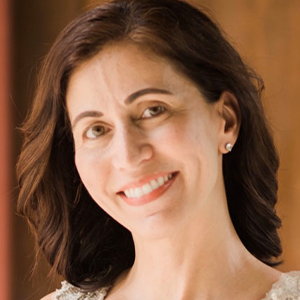
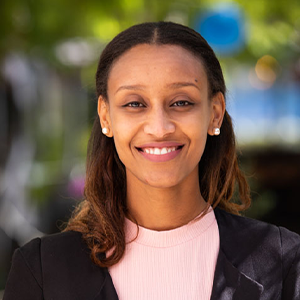
Sandra Giménez, based in Spain, is an Atlantic Fellow for Equity in Brain Health and a clinical neurophysiologist and sleep medicine expert.Amina Evangelista Swanepoel, based in the Philippines, is an Atlantic Fellow for Health Equity in Southeast Asia and executive director of Roots of Health. She works to empower women and girls to make informed decisions, advocating for sexual and reproductive health and rights.Selam Yoseph, based in Ethiopia, is an Atlantic Fellow for Equity in Brain Health and a psychiatrist working as director of the psychiatry training program at Addis Ababa University.
.jpeg)


.png)

